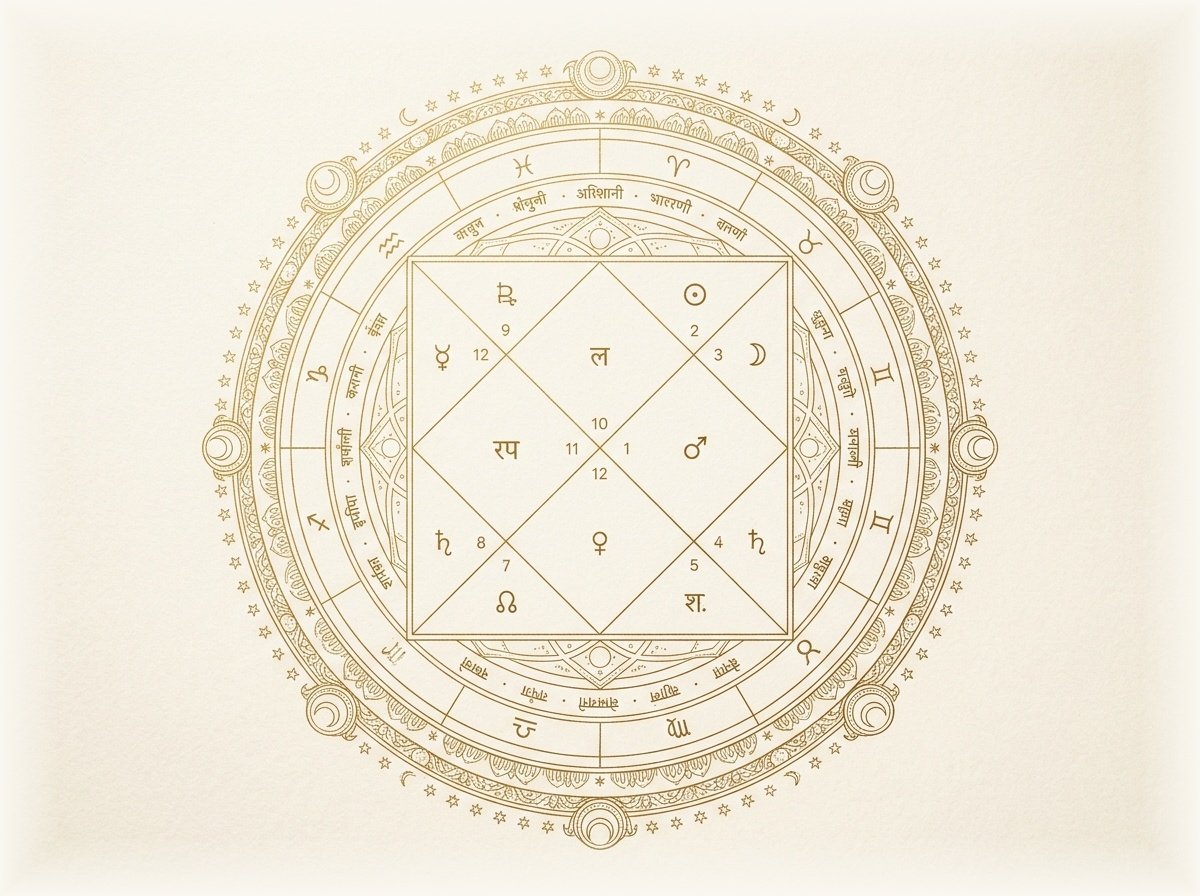
Navratri brings nine days of focused prayer, fasting, and reflection centered on Goddess Durga. Starting with Ghatasthapana on Pratipada, the fast is observed to build self-discipline, reset daily habits, and honor the protective strength Durga represents in Indian tradition.
The Nine Forms of Durga (Navadurga)
Each day of Navratri honors a different form of Goddess Durga. In traditional practice, each form corresponds to specific personal qualities, an energetic center (chakra), and a planetary influence:
- Day 1: Maa Shailaputri. Known as the daughter of the Himalayas, she embodies quiet endurance and physical vitality. Traditional texts associate her with the Muladhara (root) chakra and the calming influence of the Moon (Chandra).
- Day 2: Maa Brahmacharini. Depicted as an ascetic devoted to penance, she signifies patience, mental clarity, and self-restraint. She corresponds to the Swadhisthana (sacral) chakra and the driven energy of Mars (Mangal).
- Day 3: Maa Chandraghanta. Bearing a bell-shaped crescent moon on her brow, she stands for readiness and courage against negativity. She links with the Manipura (solar plexus) chakra and the harmony of Venus (Shukra).
- Day 4: Maa Kushmanda. Believed to have brought light and warmth to the universe with her smile, she represents life force and good health. She connects to the Anahata (heart) chakra and the Sun (Surya).
- Day 5: Maa Skandamata. The mother of Lord Kartikeya (Skanda), she reflects maternal care, clear speech, and family protection. Her placement connects with the Vishuddha (throat) chakra and the intellect of Mercury (Budh).
- Day 6: Maa Katyayani. Born from the sage Katyayana to defeat Mahishasura, she represents moral resolve and protection from hardships. She associates with the Ajna (third eye) chakra and the wisdom of Jupiter (Guru).
- Day 7: Maa Kalaratri. Her dark, fearless appearance dispels fear, illness, and superstition. She corresponds to Saturn (Shani), teaching resilience during challenging life periods.
- Day 8: Maa Mahagauri. Calm and dressed in white, she represents forgiveness, emotional balance, and the clearing of past regrets. Astrologically, she helps soothe the turbulent impulses of Rahu.
- Day 9: Maa Siddhidatri. Holding the lotus and divine implements, she bestows the eight classical Siddhis and nine Nidhis, marking the fulfillment of prayer and spiritual study. She corresponds to Ketu.
Ghatasthapana Setup and Daily Vidhi
Ghatasthapana (or Kalash Sthapana) is the welcoming ritual done on the first morning of Navratri. It is best performed during Abhijit Muhurat or an auspicious morning Choghadiya window on Pratipada Tithi.
Samagri List
- A clean shallow earthen tray filled with fresh garden soil and barley seeds (Jau or Sapta Dhanya)
- A copper, brass, or silver Kalash filled with fresh water and a few drops of Gangajal
- Five or seven fresh mango leaves (Amra Pallav) or Ashoka leaves
- A clean brown coconut with its husk, wrapped in red holy thread or cloth (moli or chunri)
- One betel nut (supari), a clean silver coin, cloves, green cardamom, and unbroken rice grains (akshat) to place inside the Kalash
- Pure cow ghee for the Akhand Diya, along with cotton wicks and natural dhoop incense
Step-by-Step Setup
- Spread the soil evenly in your earthen tray, sow the barley seeds, and lightly sprinkle water so the soil is moist.
- Fill the Kalash with water, add the supari, coin, cloves, and cardamom, and place the Kalash securely in the middle of the soil tray.
- Arrange the mango leaves neatly around the rim of the pot. Set the wrapped coconut firmly over the leaves with its top pointing toward the East.
- Recite the traditional invocation mantra: “Om Aing Hring Kleeng Chamundayai Vichche”.
- Light the Akhand Diya. Keep it placed away from direct drafts so the flame stays steady through the nine nights.
Navratri Fasting Guidelines and Food Rules
Navratri occurs during the weather shifts between seasons, in early spring (Chaitra) and autumn (Sharad). Eating light, wholesome food during this period eases digestion and keeps your energy steady:
What you can eat: Flours such as kuttu (buckwheat), singhara (water chestnut), rajgira (amaranth), and samak rice (barnyard millet). Root vegetables and mild gourds work best, including boiled potatoes, sweet potatoes, lauki (bottle gourd), raw bananas, kaddu (pumpkin), and arbi (colocasia). For seasoning, stick to sendha namak (rock salt), freshly ground black pepper, cumin seeds, green chillies, ginger, and fresh coriander leaves.
What to leave out: Wheat flour, regular rice, lentils, pulses, table salt, turmeric, and mustard oil. Onions, garlic, packaged fried snacks, alcohol, and non-vegetarian food are kept strictly off limits during the fast.
Kanya Pujan on Ashtami and Navami
Kanya Pujan (also called Kumari Puja) takes place on the eighth day (Maha Ashtami) or the ninth day (Maha Navami). Families invite nine young girls, honoring each as a form of Goddess Durga, along with one young boy who represents Batuk Bhairava.
The host washes their feet with fresh water, applies a small tilak of roli and akshat on their foreheads, and serves the customary meal of hot pooris, dry kala chana, and semolina halwa. Devotees then offer small gifts, coins, or red chunris before touching their feet to seek blessings.
Frequently Asked Questions
Why is barley grown in the Ghatasthapana tray?
Barley is traditionally considered one of the first cultivated grains in ancient India. Sowing it during Ghatasthapana is an acknowledgment of the earth’s fertility. When the tender green shoots sprout tall and healthy over the nine days, families regard it as a promising sign for health and prosperity in the coming season.
Can you fast only on the first and last day?
Yes. If long work hours, health conditions, or travel make a full nine-day fast difficult, tradition permits observing Joda Vrat. In this practice, you observe the fast on Pratipada (Day 1) and again on Ashtami (Day 8), keeping light meals on the days in between.
Practical Tips for a Smooth Vrat
Keeping a fast should support your daily well-being, not exhaust you. A few practical habits help keep your energy steady:
- Drink plenty of fluids between meals, such as coconut water, fresh buttermilk (chaach with roasted cumin), and warm lemon water.
- If you keep an Akhand Diya, keep a second small ghee lamp handy. Light it before you trim the wick of the main lamp so the flame does not go out.
- Conclude the fast calmly on Navami or Dashami morning after completing Kanya Pujan and offering morning prayers.