
Configure Gochar Parameters

Live Graha Positions

Calculated for Patna, India using the Lahiri sidereal system.

Moon SignLoading...Sun SignLoading...Retrograde NowLoading...

Graha Positions & Status

Lahiri Sidereal System
Reading the sky...
Sky Coordinates

Planetary Positions & Coordinates

Lahiri Sidereal System
Scroll horizontally to view all coordinates →
Graha Zodiac Sign Abs Longitude Deg ° Min ' Sec " Motion Nakshatra Nak Ruler
Transit Schedule

Upcoming Planetary Transits

Sign changes and retrograde periods coming next.

Loading transits...
Planet Details

Deep Dive

Position, motion, and nakshatra context for each planet.

Loading details...
Personal Transits

Personal Transit Analysis

Track how real-time planetary movements activate your natal houses, Dasha periods, and Sade Sati phase.

✦ Active House Influences ✦ Moon & Lagna Overlays ✦ Live Sade Sati Status
YOUR BIRTH DETAILS

Enter Birth Details

Used to calculate house positions relative to your natal chart.

Understanding Planetary Transits (Gochar) in Vedic Astrology

In Vedic astrology, planetary transits, known as Gochar, track the ongoing movement of planets across sidereal constellations. While your natal birth chart (Janam Kundli) forms a permanent blueprint recorded at birth, Gochar represents the dynamic astronomical clockwork that triggers the promises of that chart.

Evaluating transits requires analyzing the positions of transiting planets relative to both your natal Moon sign (Chandra Rashi) and your Ascendant (Lagna). Fast-moving grahas like the Moon, Mercury, and Venus govern short-term mood swings and daily adjustments. Slow-moving grahas like Saturn, Jupiter, Rahu, and Ketu remain in a single sign for months or years, guiding major life phases and structural transformations.

  • Sidereal Constellation Mapping: Calculations use the Lahiri Ayanamsha to align planetary longitudes directly with visible astronomical constellations.
  • Lagna and Chandra Reference: Moon sign transits reveal psychological and emotional experiences, while Lagna transits show tangible physical events.
  • Dasha Synchronization: Transiting planets produce decisive real-world events only when they activate houses and planets governed by your active Vimshottari Dasha lords.
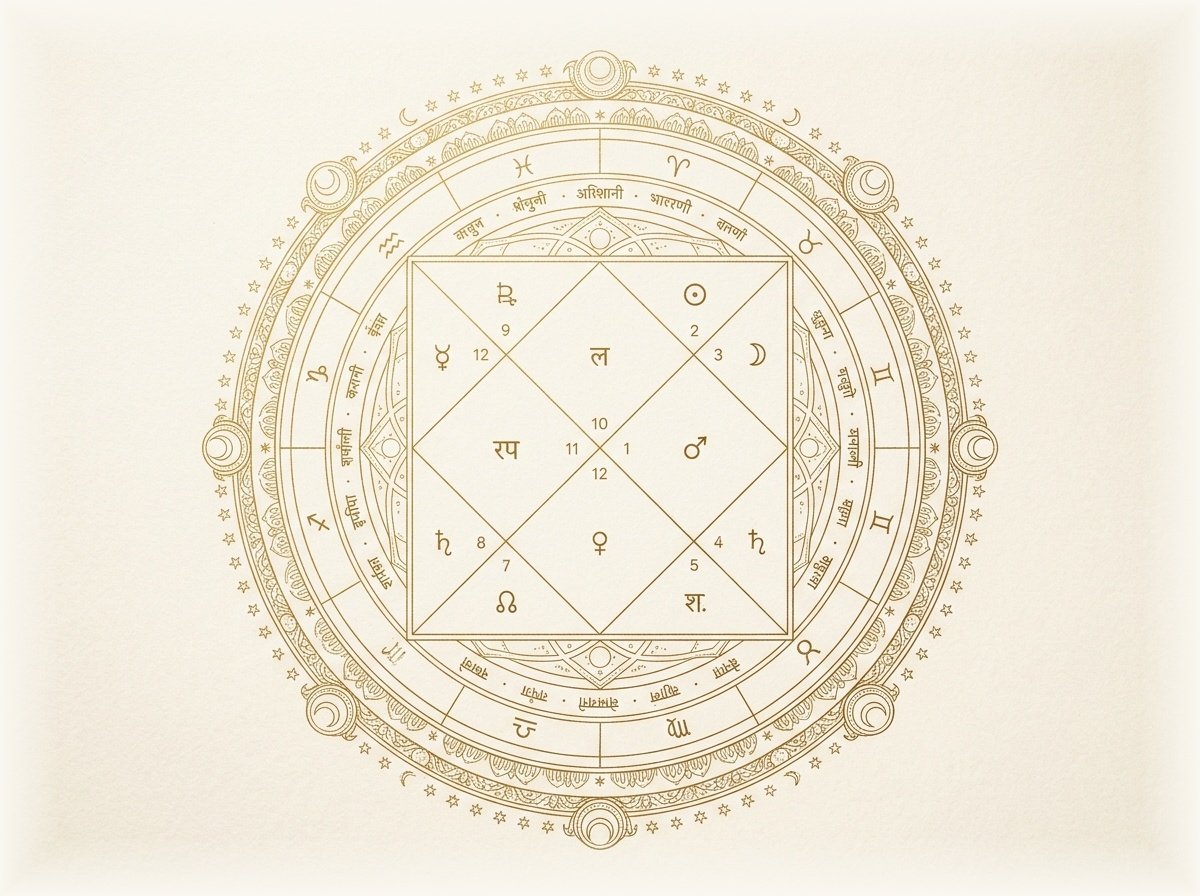
Saturn Sade Sati and Slow Planet Movements

Saturn (Shani) requires roughly 29.5 years to complete one orbit around the Sun, spending approximately 2.5 years in each zodiac sign. Its central transit cycle is Sade Sati, a 7.5-year span occurring when Saturn crosses the 12th, 1st, and 2nd houses relative to your natal Moon sign.

Rather than bringing arbitrary trouble, Sade Sati demands discipline, patience, and mature accountability. Saturn clears away shaky habits and superficial dependencies so you can build durable foundations. When Saturn crosses supportive houses from your natal Moon, such as the 3rd, 6th, and 11th houses, it rewards persistent effort with professional authority, dispute resolution, and steady financial stability.

  • Rising Phase (12th House): Directs attention to expenditure management, mental recalibration, and releasing obsolete habits.
  • Peak Phase (1st House): Tests personal resilience, health routines, and individual self-discipline under increased responsibility.
  • Setting Phase (2nd House): Reorganizes family finances, speech patterns, and long-term financial security.

Jupiter Transit (Guru Gochar) and Benefic Aspects

Jupiter (Guru) stays in each sign for about 12 months, making its yearly transit a key timing marker in Vedic astrology. Regarded as the prime natural benefic, Jupiter brings wisdom, optimism, ethical discernment, and expansion to whichever house it occupies and aspects.

When transiting Jupiter touches or aspects your 1st, 5th, 7th, 9th, or 11th house from the natal Moon, it creates auspicious windows for education, family growth, marriage, and career recognition. Jupiter casts special 5th, 7th, and 9th harmonic aspects (Drishti), extending its protective influence across three distinct life houses simultaneously.

  • 1st House Transit: Strengthens vitality, personal confidence, and public goodwill.
  • 5th House Transit: Expands creative intelligence, academic focus, and opportunities for progeny.
  • 7th House Transit: Supports marital harmony, legal agreements, and cooperative partnerships. Check auspicious timing with our Marriage Timing Predictor.
  • 9th House Transit: Encourages mentorship, higher learning, ethical clarity, and fortunate travel.

Rahu and Ketu Nodal Transit Dynamics

Rahu and Ketu move in regular retrograde motion, spending approximately 18 months in each sign and taking 18 years to cycle through the full zodiac. Positioned 180 degrees apart, their transit defines an active axis that shifts focus between two opposite houses of your chart.

Rahu points to where intense curiosity, material ambition, and unconventional experiments arise. Ketu points to where detachment, introspection, and spiritual closure occur. Favorable nodal transits over the 3rd, 6th, and 11th houses from your natal Moon support decisive competitive gains, while transits over angular Kendra houses (1st, 4th, 7th, and 10th) prompt deep life reviews and internal rebalancing.

  • 3rd House Rahu with 9th House Ketu: Grants courage, self-effort, and practical communication dominance.
  • 6th House Rahu with 12th House Ketu: Assists in clearing debts, resolving disputes, and restoring vitality.
  • 11th House Rahu with 5th House Ketu: Widens professional connections and delivers substantial monetary rewards.

Harmonizing Vimshottari Dasha with Planetary Transits

A primary rule of Parashari Jyotish is that planetary transits cannot deliver an outcome that the active Vimshottari Dasha does not authorize. The Dasha establishes the primary life theme and potential, while daily transits act as the exact clock that triggers the event into manifestation.

For instance, if your natal chart and running Mahadasha lord support career advancement, a favorable Jupiter or Saturn transit over your 10th house will trigger the job change or promotion. Conversely, if your active Dasha period indicates obstacles, even an exalted transit brings only temporary comfort. Accurate astrological timing requires reading both systems as one integrated process.

  • Dasha Priority: The Mahadasha and Antardasha lords define the main narrative and determine what events are possible.
  • Transit Trigger: Transiting grahas provide the final timing trigger that brings Dasha potential into everyday reality.
  • Nakshatra Alignment: Watching the exact Nakshatra transited by major planets helps identify precise timing windows within the month. Find your birth star on our Nakshatra Finder.

Live Planetary Transits for Major Cities & Sacred Tirthas

Track accurate, location-specific planetary positions and Ascendant timing calculated for your city.

📍 Delhi Delhi NCR 📍 New Delhi Capital Region 📍 Mumbai Maharashtra 📍 Bengaluru Karnataka 📍 Hyderabad Telangana 📍 Chennai Tamil Nadu 📍 Kolkata West Bengal 📍 Pune Maharashtra 📍 Ahmedabad Gujarat 📍 Jaipur Rajasthan 📍 Lucknow Uttar Pradesh 📍 Varanasi Kashi, UP 📍 Ujjain Mahakal, MP 📍 Ayodhya Uttar Pradesh 📍 Haridwar Uttarakhand 📍 Rishikesh Uttarakhand 📍 Mathura Braj, UP 📍 Surat Gujarat 📍 Kanpur Uttar Pradesh 📍 Nagpur Maharashtra 📍 Indore Madhya Pradesh 📍 Bhopal Madhya Pradesh 📍 Patna Bihar 📍 Vadodara Gujarat 📍 Chandigarh Punjab & Haryana 📍 Dehradun Uttarakhand 📍 London United Kingdom 📍 New York United States

Frequently Asked Questions About Planetary Transits

Clear, grounded answers about Gochar, Sade Sati, and timing life events with planetary transits.

Gochar refers to the real-time movement of planets through sidereal zodiac constellations. Unlike natal placements that remain fixed at birth, transiting grahas constantly shift position, creating new angular connections with your birth chart that trigger events across career, finance, and relationships.

Sade Sati is Saturn's 7.5-year transit through the 12th, 1st, and 2nd houses from your natal Moon sign, spending roughly 2.5 years in each sign. The cycle tests resilience, removes obsolete habits, and rewards steady self-discipline rather than causing indiscriminate hardship.

Jupiter shifts signs approximately every 12 months. Transiting through the 1st, 5th, 9th, or 11th house from your natal Moon brings expansion, academic focus, and financial opportunities, while its passage through the 7th house supports marital timing and partnership growth.

Rahu and Ketu move in permanent retrograde motion, spending 18 months in each sign and staying 180 degrees apart. Rahu drives ambitious exploration in its transited house, while Ketu fosters introspective detachment and spiritual clarity in the opposite house.

Transits can only manifest events that the running Vimshottari Dasha supports. The Dasha period sets the primary life narrative, while daily transits act as the triggering clock. Both systems must align for major career or relationship milestones to materialize.

Mars produces the sharpest short-term transit impacts, spending roughly 45 days in each sign under normal motion. Its transit across sensitive points like the Moon, Lagna, or 7th house triggers decisive energy surges, courage, and focused initiative.